Gwanghwamun Square is a big public plaza in the heart of Seoul, at 172 Sejong-daero, Jongno-gu. It’s open 24 hours a day, every day of the year, and it costs nothing to visit. During the Joseon Dynasty this was the seat of government, lined with the offices of the Six Ministries (Yukjo). After dark you get night views of Bugaksan Mountain and Gyeongbokgung Palace, lights across the square’s green spaces, and media facades on the surrounding buildings. Exit 7 of Gwanghwamun Station on Subway Line 5 brings you straight to the square, so it’s easy to add to an evening in Seoul.
What Is Gwanghwamun Square?
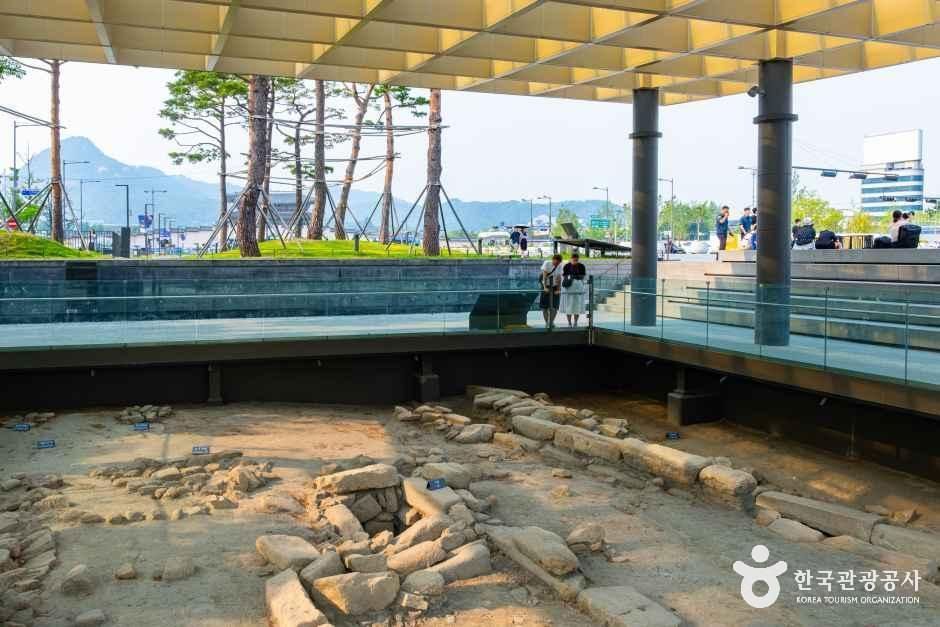
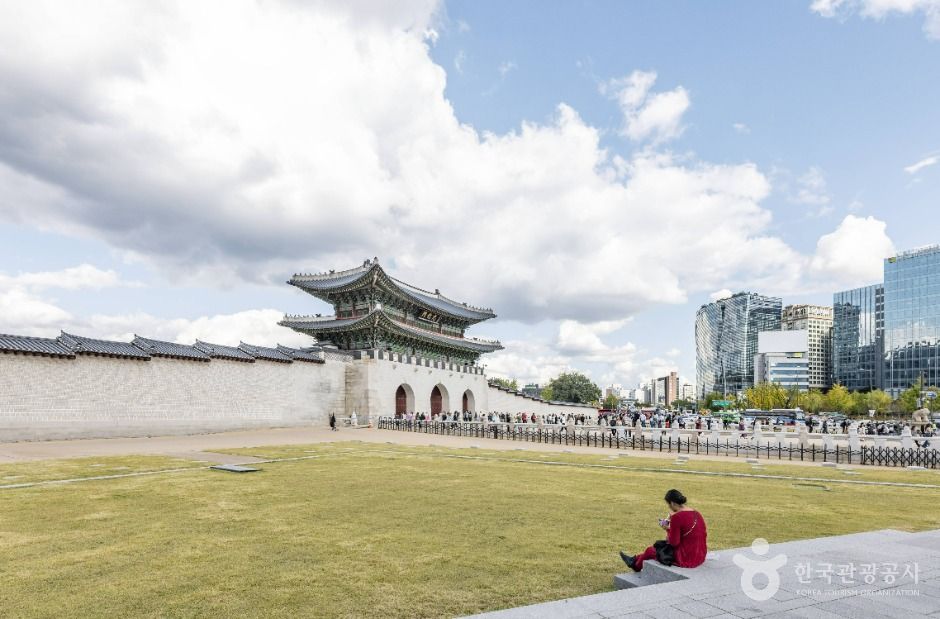
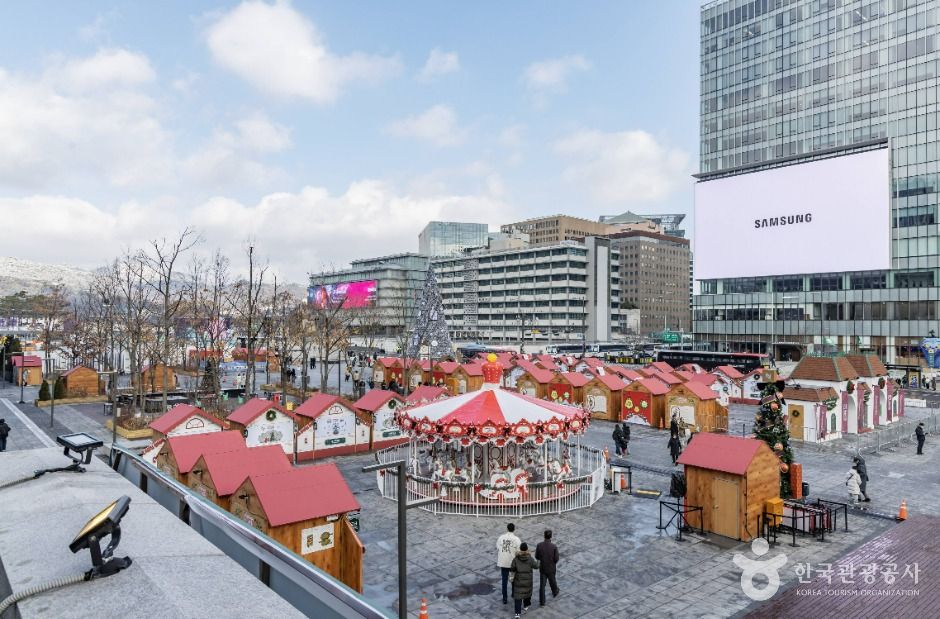
The square spreads out in front of Gwanghwamun, the main gate of Gyeongbokgung Palace. The Six Ministries that ran the Joseon state once stood here in a row. Today it’s an open civic space with a steady program of exhibitions and public events. Remains of historic structures dug up beneath the square are on display 24 hours a day, so you can still see them late at night.
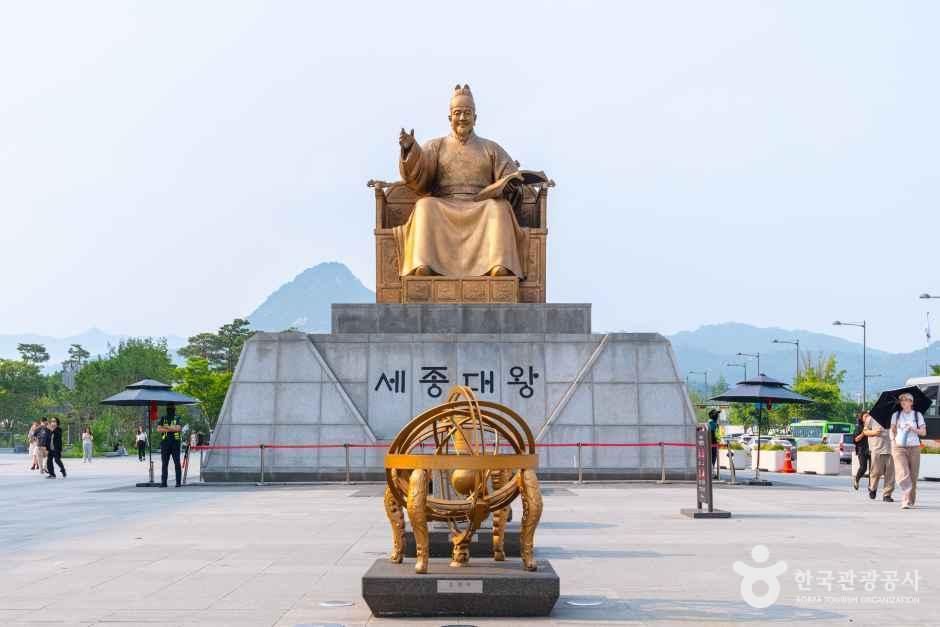
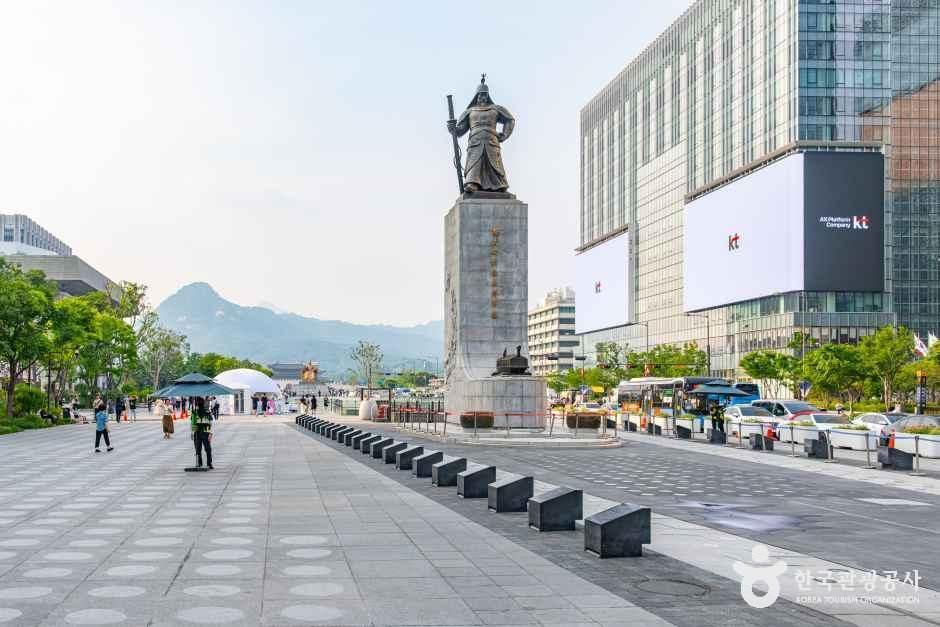
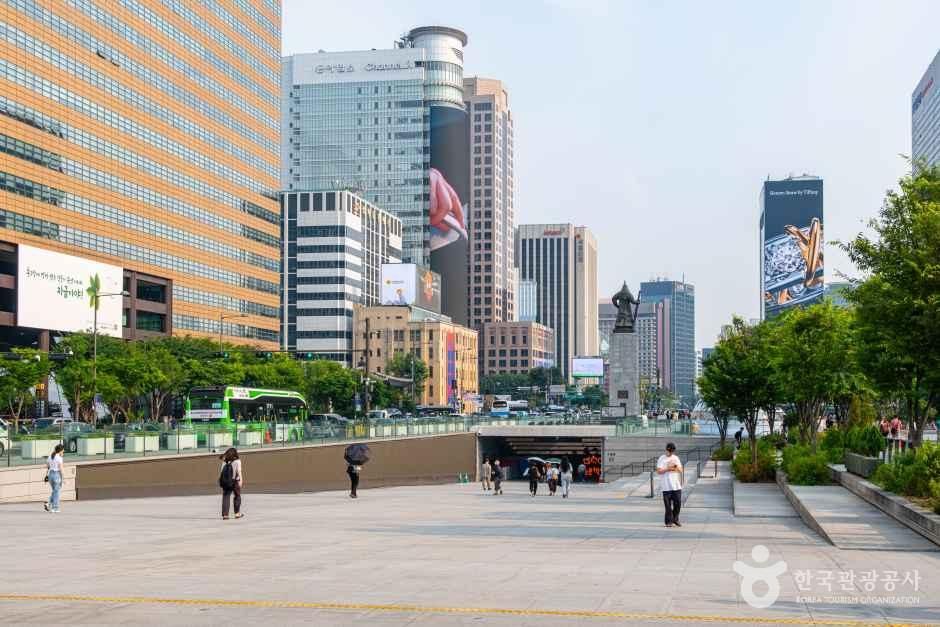
The square’s official website lists these main features:
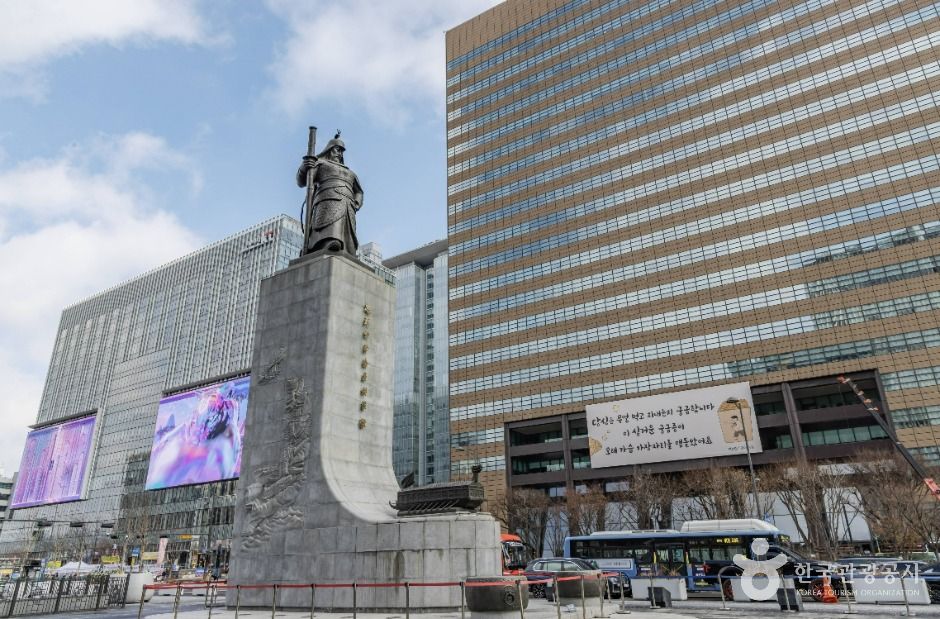
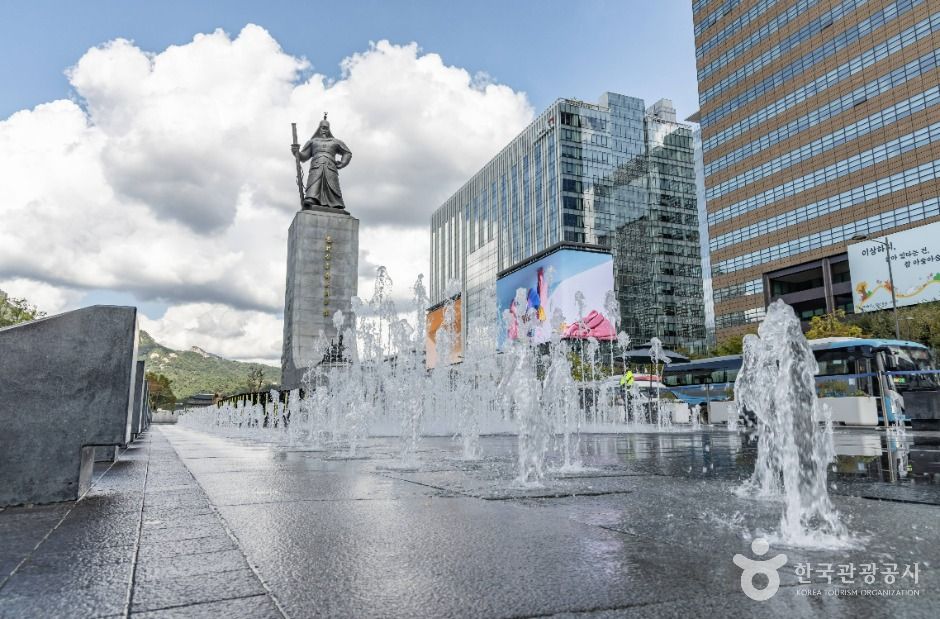
- Statue of King Sejong the Great and Statue of Admiral Yi Sun-sin
- Haechi Madang (해치마당)
- Open spaces and rest areas
- Gamsaui Jeongwon (감사의 정원)
- Sigan-ui Mulgil (시간의 물길), a water feature whose name means “waterway of time”
- Excavated historic remains
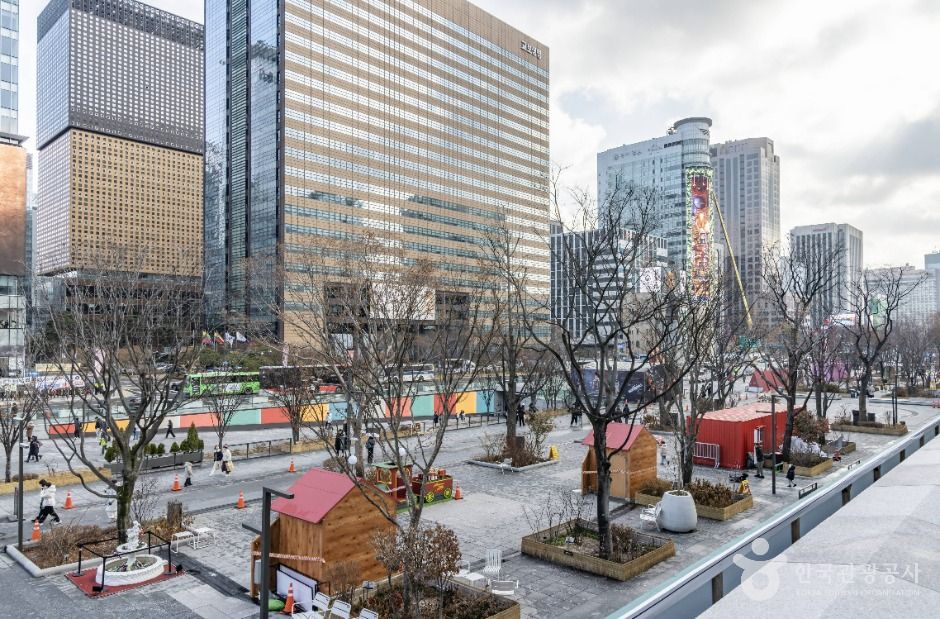
- Visitor facilities and photo spots
Gamsaui Jeongwon and Freedom Hall
Gamsaui Jeongwon (감사의 정원), whose name means “garden of gratitude,” opened on May 12, 2026. It honors the 22 countries that sent troops in the Korean War. Above ground stands the sculpture Gamsaui Bit 23 (감사의 빛 23, “Light of Gratitude 23”). Below it is Freedom Hall, a media exhibition space. A press release posted on the official Gwanghwamun Square website on October 21, 2026 said the garden had passed 500,000 visitors. The same release described an event that lit the garden in honor of friendship with Sweden (‘스웨덴 우정의 빛’).
Gwanghwamun Square at Night: Best Times and Viewing Spots
The square never closes, so you can walk in any time after sunset. Three things are worth looking out for at night:
- Toward Bugaksan and Gyeongbokgung: Look north from the square for night views of Bugaksan Mountain and Gyeongbokgung Palace.
- Lit-up green spaces: Follow the lights through the square’s planted areas for an evening walk.
- Media facades: The buildings around the square have media facades lit up after dark.
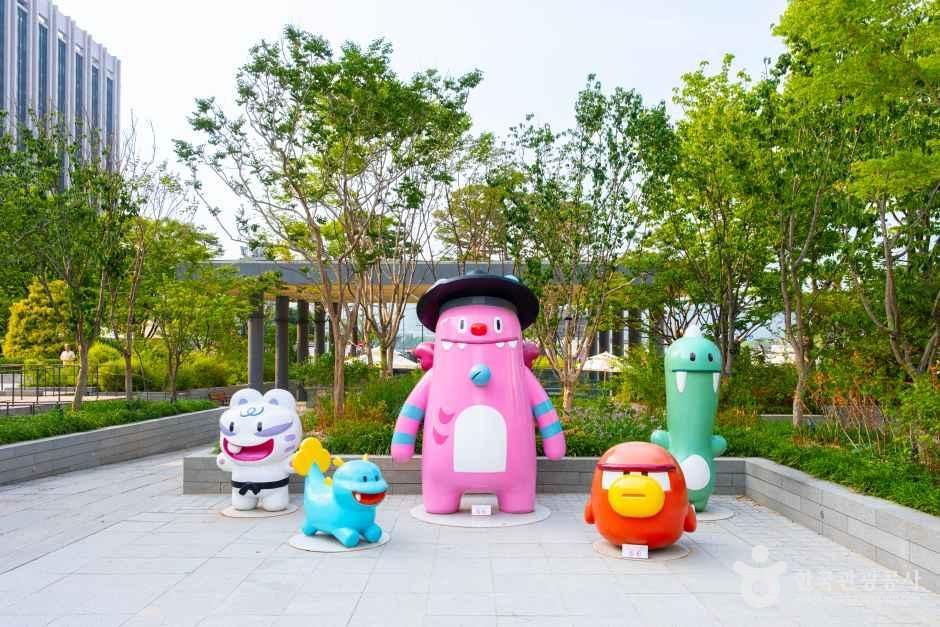
If you’d like some background as you walk, the Seoul Tourism Organization runs a guided night walking tour. Commentary is available in foreign languages.
Gwanghwamun Square Hours and Admission
| Item | Details |
|---|---|
| Hours | Open 24 hours, year-round |
| Admission | Free |
| Historic remains exhibit | 24 hours |
| Address | 172 Sejong-daero, Jongno-gu, Seoul |
| Phone | 02-120 |
| Website | https://gwanghwamun.seoul.go.kr/ |
| Parking | Not available (per the Korea Tourism Organization) |
The splash fountain’s hours change with the season:
| Season | Hours |
|---|---|
| April–May, September–October | 10:00–19:50 |
| June–August | 10:00–20:50 |
How to Get to Gwanghwamun Square
The easiest way in is Gwanghwamun Station on Subway Line 5. Take the Haechi Madang underground passage or Exit 7, then walk toward the square’s forest area (광장숲). On Line 3, get off at Gyeongbokgung Station, leave by Exit 6, and head toward Government Complex Seoul and Gwanghwamun.
| From | Transport | Get off at | Travel time / fare |
|---|---|---|---|
| Central Seoul | Subway Line 5 | Gwanghwamun Station, Haechi Madang passage or Exit 7 | Not officially listed |
| Central Seoul | Subway Line 3 | Gyeongbokgung Station, Exit 6 | Not officially listed |
| Central Seoul | Bus | Sejong Center for the Performing Arts or KT Gwanghwamun Branch stop | Not officially listed |
| Incheon International Airport | Airport Bus 6002 | Route passes the square | Not officially listed |
These bus routes run past the square. Routes can change, so check again before you set off.
| Type | Routes |
|---|---|
| Circular | 01A (stops in front of KT Gwanghwamun Branch) |
| Trunk (blue) | 101, 103, 109, 150, 160, 260, 270, 271, 273, 370, 401, 406, 470, 600–606, 700–709, 720, 721, 741, and others |
| Branch (green) | 1020, 1711, 7016, 7018, 7019, 7022, 7212 |
| Express (red) | Some routes pass near the square |
The square has no parking, so take public transport.
Gwanghwamun Square Tips
- Use the foreign-language guide: The Gwanghwamun AI docent works in five languages. You can learn about the square’s history and features without knowing any Korean.
- See the historic remains at night: The exhibit of excavated remains is open 24 hours, so you can stop by during your night walk.
- Catch the fountain before it shuts off: The splash fountain stops at 19:50 through October and at 20:50 in summer (June–August). If you want both the fountain and the night views, plan your arrival around those times.
- Check what’s on at the square: An autumn market for small local businesses (소상공인 가을마켓) runs from September 1 to November 5, 2026. The main events of the 2026 Gwanghwamun Bitmorak Festival (2026 광화문 빛모락 축제) ended on October 24–25. A follow-up program, the Bitmorak Story Tour, runs every Friday and Saturday in November. Schedules and sign-up details will be posted on the Gwanghwamun Square website.
- With kids? Plan for December’s mission game: The Bitmorak mission game Eorini Yeoksa Tamheomdae (어린이 역사 탐험대, “Young History Explorers”) is set to run every weekend in December. Kids pick up a mission sheet at Freedom Hall in Gamsaui Jeongwon. They then make their way around spots like the Statue of Admiral Yi Sun-sin, the Statue of King Sejong the Great, and the garden, completing tasks along the way to earn a souvenir. Exact dates will be announced in December.
Frequently Asked Questions
Is there an admission fee for Gwanghwamun Square?
No, it’s free. Gwanghwamun Square is a public plaza that anyone can visit at no cost.
What time does Gwanghwamun Square close?
It doesn’t close. The square is open 24 hours a day, year-round, so you can come late at night and still take in the night views.
Which exit should I use at Gwanghwamun Station?
Take Exit 7 or the Haechi Madang passage at Gwanghwamun Station on Subway Line 5. Once you’re out, walk toward the square’s forest area (광장숲). If you’re on Line 3, use Exit 6 at Gyeongbokgung Station.
Can I park near Gwanghwamun Square?
No, the square has no parking lot. The Korea Tourism Organization also lists parking as unavailable, so the subway or bus is the better choice.
Can I take an airport bus from Incheon Airport to Gwanghwamun Square?
Yes. Airport Bus 6002 passes the square. Its fare and travel time aren’t given in official information, though, so check them before you board.
What are Gamsaui Jeongwon and Freedom Hall at Gwanghwamun Square?
Gamsaui Jeongwon (감사의 정원) is a memorial space that honors the 22 countries that fought in the Korean War. It opened on May 12, 2026. Above ground is the sculpture Gamsaui Bit 23 (감사의 빛 23), and underground is Freedom Hall, a media exhibition space.
Is information available in foreign languages?
Yes. The Gwanghwamun AI docent works in five languages, and the Seoul Tourism Organization’s guided night walking tour also offers foreign-language commentary.
What events are happening at Gwanghwamun Square in November and December?
The Bitmorak Story Tour runs every Friday and Saturday in November. The small-business autumn market continues until November 5. In December, the children’s mission game Eorini Yeoksa Tamheomdae (어린이 역사 탐험대) is set to run every weekend. Full schedules are on the Gwanghwamun Square website (https://gwanghwamun.seoul.go.kr/).
When does the splash fountain run?
It runs 10:00–19:50 in April–May and September–October, and 10:00–20:50 in June–August.